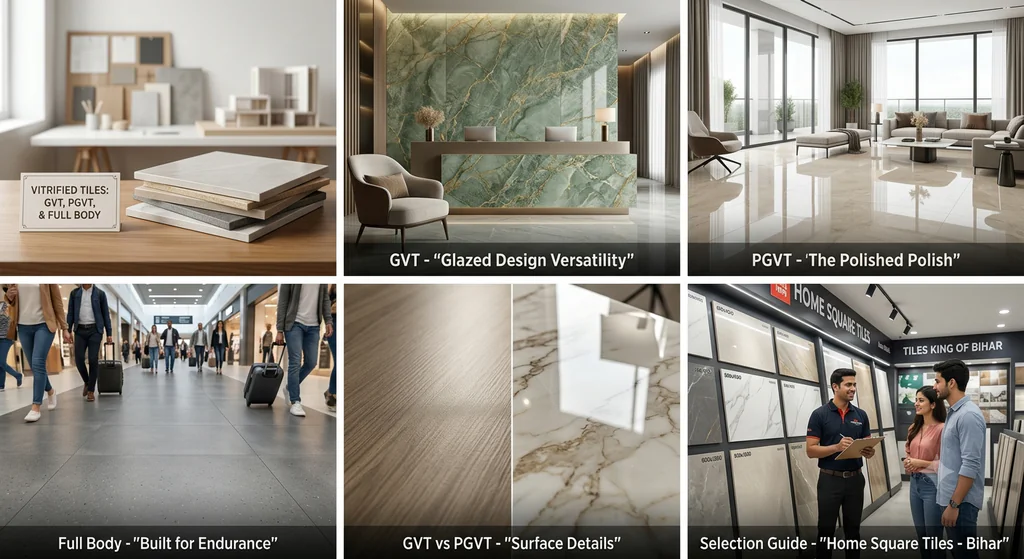
When choosing Home Square Tiles for a home or office, buyers encounter terms like GVT, PGVT, and Full Body Tiles.
Moreover, while all three are vitrified tiles, they differ in manufacturing, design, surface finish, application, durability, and maintenance.
For buyers and dealers, Home Square Tiles differ in GVT, PGVT, and Full Body options.
Thus, the right tile depends on where it will be installed, foot traffic, appearance, budget, and maintenance.
Additionally, this detailed guide covers Home Square Tiles. It explains GVT, PGVT, and Full Body Tiles, along with their features and advantages. It also discusses applications, differences, and how to select the right option.
If you are looking for a wide range of quality tiles, choose Home Square Tiles – Tiles King of Bihar, with options designed for residential, commercial, institutional, and government projects.
What Are Vitrified Tiles?
Before understanding GVT, PGVT, and Full Body Tiles, it is important to understand vitrified tiles.
Vitrified tiles are manufactured using a mixture of materials such as clay, silica, quartz, feldspar, and other mineral components. These materials are processed and fired at high temperatures to create a dense, low-porosity tile.
Compared with conventional ceramic tiles, vitrified tiles generally offer:
- Low water absorption
- High density
- Good strength
- Easy maintenance
- Consistent dimensions
- Wide design possibilities
- Suitability for residential and commercial applications
Modern digital printing technology has also transformed the appearance of vitrified tiles. Today, buyers can choose from marble-look, stone-look, wood-look, concrete-look, metallic, terrazzo, and many other designs.
Among the popular categories are GVT, PGVT, and Full Body Vitrified Tiles.
What Is GVT?
GVT stands for Glazed Vitrified Tile.
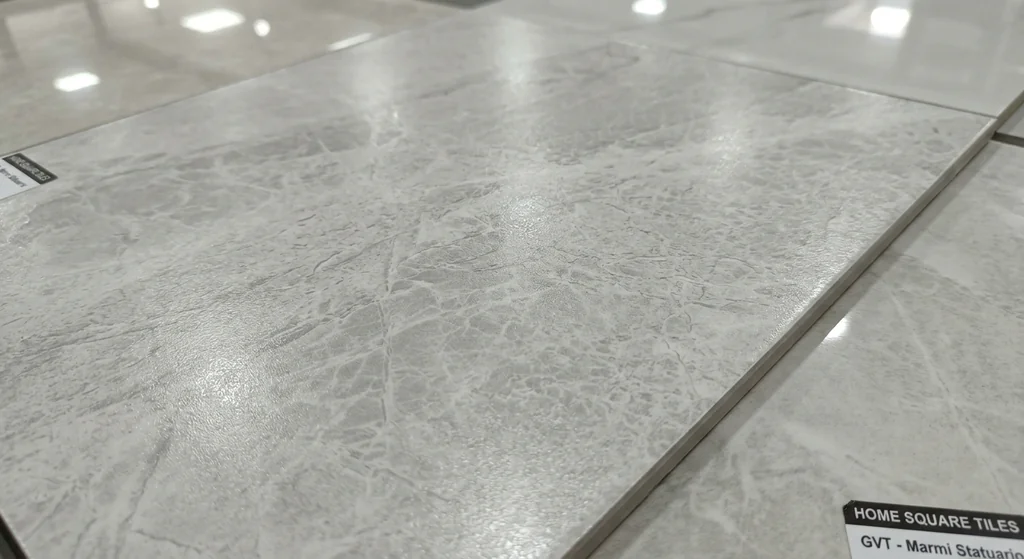
GVT is a vitrified tile that has a decorative glazed surface. The surface can be digitally printed with different patterns, colors, textures, and designs.
The glazing and digital printing technology allows manufacturers to create highly detailed designs that can replicate natural materials such as:
- Italian marble
- Natural stone
- Travertine
- Granite
- Concrete
- Wood
- Terrazzo
- Fabric
- Abstract patterns
GVT has become particularly popular for modern residential and commercial interiors because it provides a combination of design flexibility and vitrified tile performance.
Key Features of GVT
- Attractive digital designs
- Wide range of colors and patterns
- Smooth or matte surface options
- Low water absorption
- Easy to clean
- Suitable for many interior applications
- Available in multiple sizes
GVT is commonly available in sizes such as:
600×600 mm, 600×1200 mm, 800×800 mm, 800×1600 mm and larger formats, depending on the manufacturer’s product range.
Where Can GVT Tiles Be Used?
GVT is particularly suitable for areas where appearance is an important consideration.
Common applications include:
- Living rooms
- Bedrooms
- Dining areas
- Feature walls
- Office interiors
- Reception areas
- Showrooms
- Hotels
- Retail spaces
- Commercial interiors
For example, a marble-look GVT tile can create a premium appearance in a living room without requiring natural marble.
However, buyers should always select the surface finish according to the application. A polished decorative surface may be suitable for some indoor areas, while a matte or anti-skid surface may be more appropriate for areas where slip resistance is important.
What Is PGVT?
PGVT stands for Polished Glazed Vitrified Tile.
PGVT is essentially a glazed vitrified tile with a polished surface. The polishing process gives the tile a glossy appearance and can enhance the visual depth of digitally printed designs.
This is one reason why PGVT marble-look tiles are widely used in premium interiors.
The reflective surface can make an area appear more spacious and bright.
Key Features of PGVT
- Glossy polished surface
- Premium appearance
- Marble and stone-inspired designs
- Digital printing possibilities
- Easy cleaning
- Suitable for many interior applications
- Available in several large and standard formats
PGVT is particularly popular among customers who want a luxurious appearance for floors and walls.
Where Can PGVT Tiles Be Used?
PGVT is commonly considered for:
- Living room flooring
- Bedroom flooring
- Dining areas
- Hotel interiors
- Corporate offices
- Reception areas
- Showrooms
- Retail interiors
- Feature walls
- Luxury residential projects
For example, a 600×1200 mm polished marble-look PGVT tile can create a contemporary appearance with fewer visible joints than smaller tiles.
However, polished surfaces should be selected carefully for wet areas. For bathrooms, balconies, outdoor areas, and other locations where water may be present, buyers should consider tiles with appropriate anti-skid characteristics rather than selecting a tile based only on gloss or appearance.
What Are Full Body Vitrified Tiles?
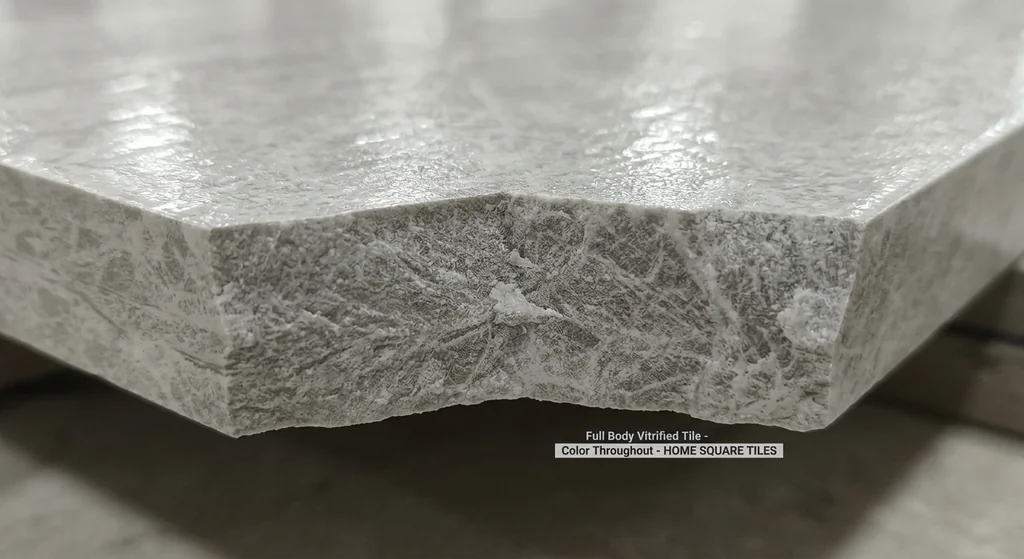
Full Body Vitrified Tiles are manufactured so that the color and material characteristics extend through the body of the tile rather than relying primarily on a decorative surface layer.
This characteristic makes full-body tiles particularly relevant for areas exposed to heavy traffic and wear.
If the surface experiences scratches or abrasion over time, the visual impact can be less noticeable than it may be with a tile where the design is concentrated primarily on the surface.
Key Features of Full Body Tiles
- Dense vitrified body
- High durability
- Suitable for heavy-traffic applications
- Strong resistance to wear
- Suitable for commercial environments
- Available in different colors and finishes
- Practical for demanding applications
Full Body Vitrified Tiles are often considered where performance and durability are more important than highly detailed decorative patterns.
Where Are Full Body Tiles Used?
Full Body Vitrified Tiles can be suitable for areas such as:
- Shopping malls
- Airports
- Railway stations
- Hospitals
- Schools
- Colleges
- Government buildings
- Corporate buildings
- Commercial corridors
- Retail stores
- Industrial facilities
- High-footfall areas
They can also be used in residential projects where the buyer wants a highly durable flooring solution.
For government and institutional projects, tile selection should always be based on the applicable project specifications, test requirements, approved makes, and tender conditions.
GVT vs PGVT vs Full Body Tiles: Key Differences
The biggest difference between these three tile categories is the surface treatment, appearance, and intended application.
| Feature | GVT | PGVT | Full Body |
|---|---|---|---|
| Full Form | Glazed Vitrified Tile | Polished Glazed Vitrified Tile | Full Body Vitrified Tile |
| Surface | Glazed | Polished glazed | Generally through-body composition |
| Appearance | Decorative | Glossy/premium | More uniform |
| Design Options | Very high | Very high | Generally more limited |
| Marble Looks | Available | Highly popular | Available in selected designs |
| Gloss | Depends on finish | Usually high | Depends on finish |
| Heavy Traffic | Application dependent | Application dependent | Particularly suitable |
| Maintenance | Generally easy | Generally easy | Generally easy |
| Residential Use | Yes | Yes | Yes |
| Commercial Use | Yes | Yes | Yes |
| High-Footfall Areas | Depends on specification | Depends on specification | Often preferred |
| Main Advantage | Design flexibility | Luxury appearance | Durability |
GVT vs PGVT: What Is the Difference?
One of the most common questions buyers ask is:
“What is the difference between GVT and PGVT?”
The answer is relatively simple.
GVT is the broader category of glazed vitrified tiles, while PGVT refers to polished glazed vitrified tiles.
A GVT can have different surface finishes, including matte, glossy, structured, or other finishes depending on the product.
PGVT specifically emphasizes the polished/glossy surface.
Example
Suppose two tiles have the same base design.
- Tile A has a matte surface → it may be classified as GVT.
- Tile B has a polished glossy surface → it may be classified as PGVT.
The choice depends on the desired appearance, application, maintenance, and technical characteristics.
PGVT vs Full Body Tiles
PGVT and Full Body Tiles are designed with different priorities.
PGVT is generally selected when the buyer wants a visually attractive, polished surface.
Full Body Vitrified Tile is generally selected when durability and resistance to wear are major considerations.
For example:
Luxury living room
A polished marble-look PGVT can provide a premium appearance.
Shopping mall corridor
A suitable Full Body Vitrified Tile may be considered because of continuous pedestrian traffic.
Again, technical specifications should be checked before making the final selection.
Which Tile Is Better for Your Home?
There is no single tile that is universally suitable for every location.
The right choice depends on your requirements.
For Living Room
Consider:
GVT or PGVT
If your priority is interior appearance and decorative design, GVT and PGVT offer extensive choices.
For a luxury appearance, marble-look PGVT is a popular option.
For Bedroom
Consider:
GVT or PGVT
Matt GVT can provide a contemporary appearance, while polished PGVT can create a more luxurious look.
For Bathroom
Selection should focus on slip resistance, water exposure, surface finish, and applicable technical specifications rather than simply choosing the most glossy tile.
Anti-skid options are generally more appropriate for wet floor areas.
For Commercial Spaces
Consider:
GVT, PGVT, or Full Body depending on traffic and application.
A showroom may prioritize design, while a high-footfall corridor may prioritize wear resistance.
For Government Projects
For government and institutional projects, tile selection should be based on:
- Tender specifications
- Approved technical parameters
- Required test reports
- Applicable BIS/IS requirements
- Water absorption
- Breaking strength
- Modulus of rupture
- Surface characteristics
- Abrasion/wear requirements
- Size and dimensional tolerances
- Project-specific approval requirements
The selected product should meet the specifications stated in the relevant tender or project documentation.
How to Choose the Right Tile?
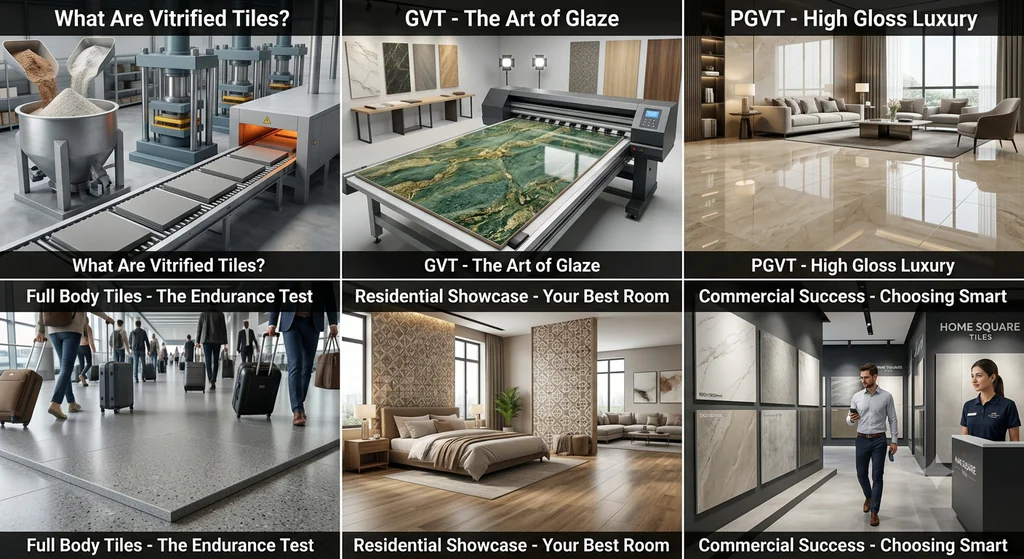
Before purchasing tiles, consider these seven factors.
1. Location
First identify where the tile will be installed.
A living room, bathroom, balcony, showroom, hospital, and airport all have different requirements.
2. Foot Traffic
Low-traffic residential areas and high-traffic commercial areas may require different performance characteristics.
3. Surface Finish
Choose between:
- Glossy
- Polished
- Matt
- Structured
- Anti-skid
depending on the application.
4. Design
For interior decoration, consider:
- Marble
- Stone
- Wood
- Concrete
- Terrazzo
- Plain colors
- Decorative patterns
5. Size
Large-format tiles can create fewer visible joints and a contemporary appearance, but installation requires appropriate handling and workmanship.
6. Maintenance
Consider how frequently the surface will need cleaning and whether it is exposed to dirt, water, stains, or heavy traffic.
7. Technical Specifications
Never select a tile only because it looks attractive.
For professional projects, check the relevant technical parameters and test reports.

Why Choose Home Square Tiles?
When selecting tiles for your home or project, the brand, product range, technical specifications, availability, and service support all matter.
Home Square Tiles offers a range of tile solutions for residential, commercial, institutional, and project applications.
The range can include products across categories such as:
- GVT
- PGVT
- Double Charge Vitrified Tiles
- Full Body Vitrified Tiles
- Ceramic Wall Tiles
- Anti-Skid Tiles
- Parking Tiles
- Large-format tiles
- Marble-look tiles
- Stone-look tiles
With different sizes, colors, textures, and surface finishes, buyers and dealers can select products according to their project requirements.
Home Square Tiles – Tiles King of Bihar
For buyers searching for quality tile solutions in Bihar, Home Square Tiles – Tiles King of Bihar is positioned as a tile brand offering products across multiple categories and applications.
From modern residential interiors to commercial and institutional projects, choosing the right tile requires a balance of design, durability, technical performance, application suitability, and budget.
Whether you are a homeowner looking for a stylish living-room floor, an architect designing a commercial project, a contractor working on an institutional building, or a dealer expanding your tile portfolio, understanding the difference between GVT, PGVT, and Full Body Tiles can help you make a more informed product selection.

GVT, PGVT or Full Body: Quick Decision Guide
Here is a simple way to understand the selection:
Want attractive designs and flexibility?
→ Consider GVT
Want a glossy, premium marble-like appearance?
→ Consider PGVT
Want a tile for demanding, high-traffic applications?
→ Consider Full Body Vitrified Tiles, subject to the required technical specifications.
Need anti-skid flooring?
→ Look specifically for an appropriate anti-skid tile/surface specification, rather than selecting only by GVT/PGVT classification.
Frequently Asked Questions
Is GVT better than PGVT?
GVT and PGVT serve different surface preferences. PGVT is a polished glazed vitrified tile, while GVT is a broader glazed vitrified category. The appropriate option depends on the application and desired finish.
Is PGVT good for flooring?
PGVT can be suitable for many indoor flooring applications. However, the specific product’s technical characteristics and the intended location should be considered before installation.
Are Full Body Tiles stronger?
Full Body Vitrified Tiles are designed with through-body characteristics and are commonly used in demanding applications. Actual performance depends on the product’s specifications and applicable standards.
Which tile is best for a living room?
GVT and PGVT are both commonly considered for living-room interiors because of their design variety. The final selection depends on the desired appearance, surface finish, size, maintenance requirements, and budget.
Which tile is suitable for high-traffic areas?
Full Body Vitrified Tiles are commonly considered for high-traffic applications because wear resistance is an important consideration. However, the product’s technical specifications should always be checked for the particular project.
What is the difference between GVT and PGVT?
GVT means Glazed Vitrified Tile, while PGVT means Polished Glazed Vitrified Tile. PGVT specifically has a polished surface.
Final Thoughts
Choosing between GVT, PGVT, and Full Body Tiles is not simply about deciding which tile looks better. Each category has different characteristics and potential applications.
GVT provides extensive design flexibility.
PGVT offers a polished and luxurious appearance.
Full Body Vitrified Tiles are commonly considered for applications where durability and wear resistance are important.
The best selection should be based on application, traffic, surface requirements, design preference, technical specifications, installation conditions, and budget.
If you are exploring different tile options for your home, commercial property, institutional project, or government project, explore the range from Home Square Tiles – Tiles King of Bihar and select the product that matches your specific requirements.
Home Square Tiles – Tiles King of Bihar
Quality surfaces. Contemporary designs. Solutions for every space.
Very informative guide! The comparison between GVT, PGVT, and Full Body Tiles makes it much easier for buyers to choose the right tile for their space.