
21 October 2026 · 14 min read
How to Select Tiles According to Your Budget by Home Square – Tiles King of Bihar
Introduction Choosing the right tiles for your home is an important decision that influences the beauty, durability, comfort, and long-term maintenance of your living space. Whether you are constructing a new house, renovating an existing property, designing a modern apartment, or building a commercial space, selecting tiles according to your budget can help you achieve
Introduction
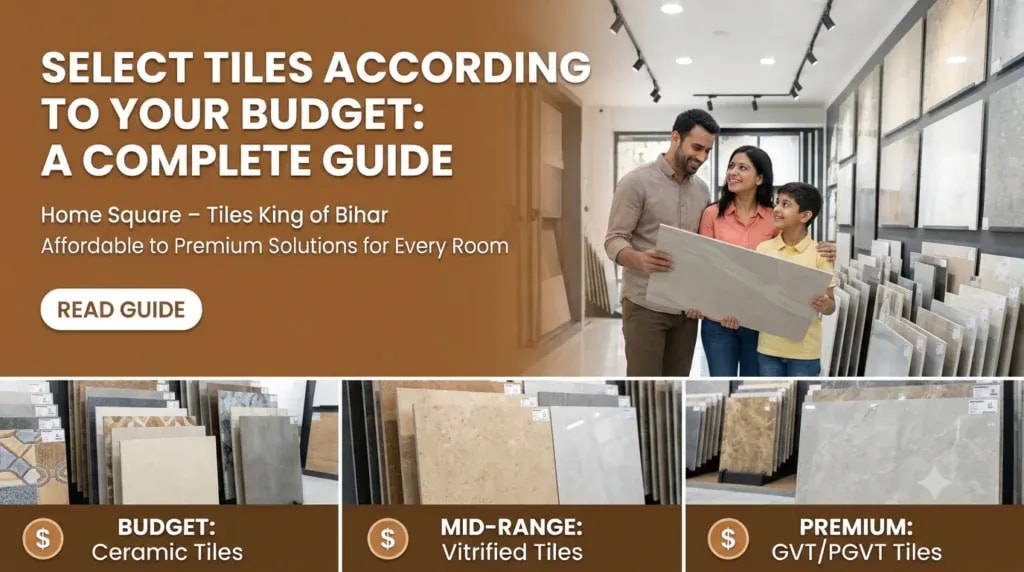
Choosing the right tiles for your home is an important decision that influences the beauty, durability, comfort, and long-term maintenance of your living space. Whether you are constructing a new house, renovating an existing property, designing a modern apartment, or building a commercial space, selecting tiles according to your budget can help you achieve the perfect balance between quality and affordability.
With so many options available in the market, including ceramic tiles, vitrified tiles, double-charge vitrified tiles, glazed vitrified tiles (GVT), polished glazed vitrified tiles (PGVT), and anti-skid tiles, it can be challenging to determine which product is best for your requirements. The key is to understand your needs, compare the available options, and invest in tiles that provide the best value for your money.
Home Square – Tiles King of Bihar offers a wide range of tile solutions designed to complement different budgets, preferences, and applications. From elegant living room floors to stylish bathroom walls and durable parking areas, choosing the right tiles can transform your property without putting unnecessary pressure on your finances.
In this comprehensive guide, we will explain how to select tiles according to your budget, what factors influence tile prices, which tiles are suitable for different rooms, and how to save money while maintaining quality.
1. Determine Your Total Tile Budget Before Shopping
Before exploring different tile designs, establish a realistic budget for your project. Many homeowners focus only on the price per square foot or square metre and overlook additional expenses such as installation, adhesive, grout, transportation, wastage, and surface preparation.
A well-planned budget should include the following components
- Tile cost: The total price of the tiles required for your project.
- Installation cost: Labour charges for laying tiles.
- Adhesive and grout: Materials required for proper installation and finishing.
- Surface preparation: Levelling, waterproofing, or repairing the existing floor or wall.
- Transportation: Delivery charges from the supplier to your site.
- Wastage allowance: Additional tiles required for cutting, breakage, and future repairs.
For example, if you are planning to install tiles in a 1,000-square-foot area, you should calculate the required quantity, select an appropriate tile category, and reserve an amount for installation and other expenses.
A practical starting point is to purchase approximately 5–10% extra tiles for a straightforward layout. Complex patterns, diagonal installation, and numerous corners may require more. Confirm the quantity with your installer before placing the final order.
Home Square Tip: Decide your maximum project budget first and then select tile designs within that range. This approach helps you avoid overspending while ensuring that essential quality requirements are not compromised.
2. Understand the Different Types of Tiles Available
The type of tile you choose has a significant impact on your budget. Each category offers different features, appearances, and applications.
A. Ceramic Tiles: A Budget-Friendly Choice
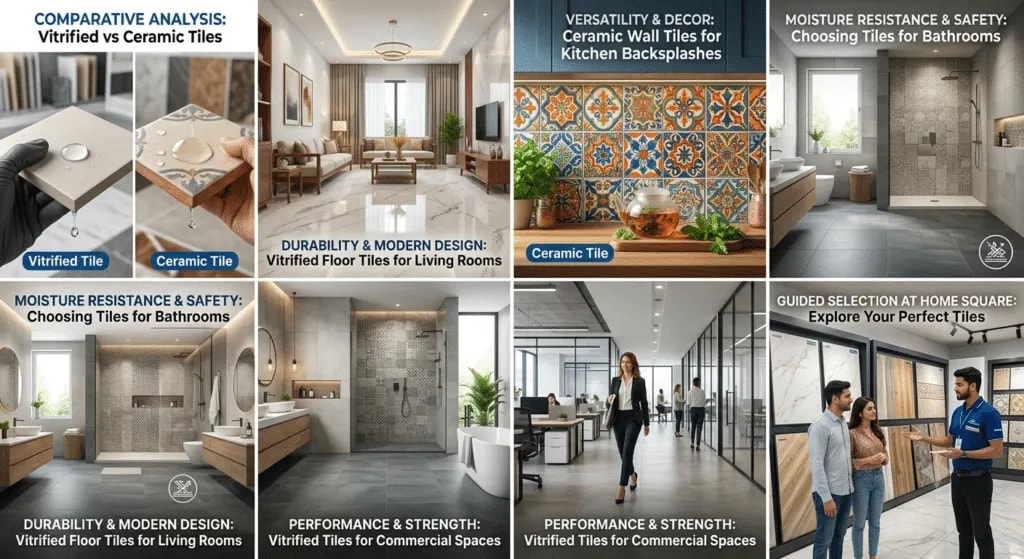
Ceramic tiles are a popular option for homeowners looking for attractive designs at an economical price. They are available in numerous colours, patterns, and finishes, making them suitable for many interior applications.
Best applications
- Kitchen walls and backsplashes
- Bathroom walls
- Utility areas
- Selected residential flooring applications, depending on the product specification
Why choose ceramic tiles?
Ceramic tiles can be an excellent option when you want to control renovation expenses without sacrificing visual appeal. Wall tiles are particularly useful for adding colour, texture, and design to kitchens and bathrooms.
Before purchasing ceramic floor tiles, check their intended application, slip resistance, durability, and technical specifications.
B. Vitrified Tiles: A Balance Between Durability and Style
Vitrified tiles are widely used in residential and commercial projects because of their relatively low water absorption, durability, and variety of designs.
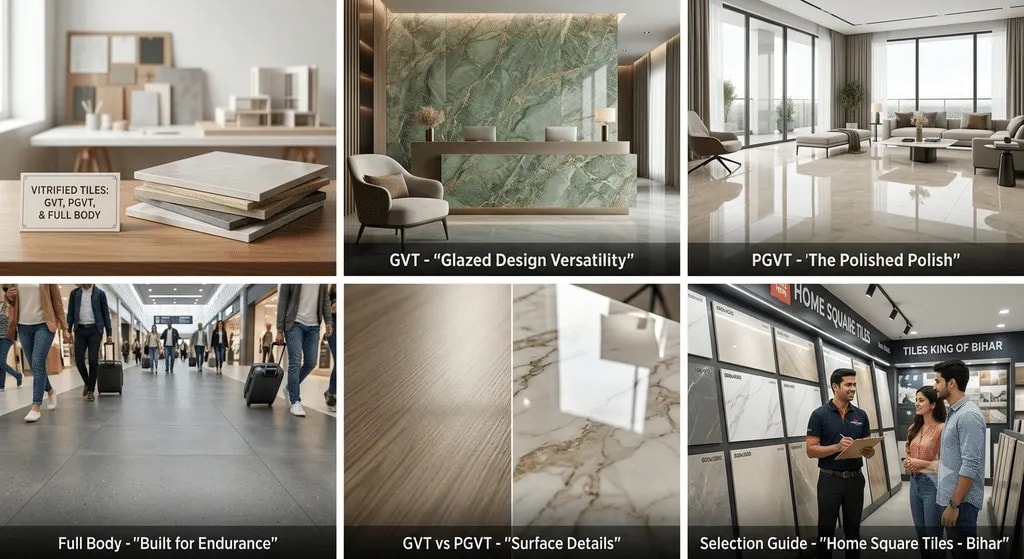
They are available in several formats and finishes, including double-charge vitrified tiles, glazed vitrified tiles, and other specialised categories.
Best applications
- Living rooms
- Bedrooms
- Dining rooms
- Corridors
- Offices and selected commercial spaces
Vitrified tiles can be a worthwhile investment for homeowners who want a durable floor with a premium appearance. The final price depends on the tile category, size, finish, design, and product specifications.
C. Double-Charge Vitrified Tiles: Practical and Elegant
Double-charge vitrified tiles feature a decorative layer produced using a double-charging manufacturing process. They are often selected for projects that require an elegant appearance and a durable surface.
Best applications
- Living rooms
- Bedrooms
- Hallways
- Selected commercial areas
These tiles are worth considering when you want a sophisticated floor design without necessarily choosing a highly decorative or premium-priced product.
D. GVT and PGVT Tiles: Premium Design Options
Glazed vitrified tiles (GVT) offer a wide range of designs, including marble-inspired patterns, stone textures, and contemporary decorative finishes. PGVT tiles feature a polished finish that can create a glossy and luxurious appearance.
Best applications
- Living rooms
- Feature floors
- Bedrooms
- Modern apartments
- Selected commercial interiors
Large-format marble-look tiles can make a room appear more spacious and create a seamless visual effect. However, their purchase price and installation requirements can be higher than those of some standard tile options.
If your budget is limited, consider using premium GVT or PGVT tiles in selected areas, such as the living room, and more economical options in less prominent spaces.
E. Anti-Skid Tiles: Safety Comes First
Anti-skid tiles are designed to provide improved slip resistance under specified conditions. They are especially important in areas that may become wet.
Best applications
- Bathrooms
- Balconies
- Terraces
- Outdoor walkways
- Selected utility areas
When choosing anti-skid tiles, consider the intended environment, surface texture, drainage, cleaning requirements, and relevant slip-resistance specifications.
Safety should never be compromised simply to reduce the cost of a tile project.
F. Parking Tiles: Designed for Appropriate Outdoor Use
Parking tiles are available in formats and finishes intended for certain outdoor and vehicle-use applications.
Best applications
- Residential parking areas
- Driveways
- Garages
- Selected outdoor spaces
Always verify the tile’s suitability for vehicle loads, installation conditions, and exposure to weather before purchasing. A tile that looks attractive may not be suitable for a particular parking application.
3. Choose Tiles According to Your Budget Range
Your budget can help narrow down the available options. The following categories are illustrative rather than fixed market-price bands because actual prices vary by product, location, quantity, and supplier.
Budget-Friendly Tiles
If affordability is your primary concern, focus on functional designs and standard formats.
Consider
- Economical ceramic wall tiles
- Suitable standard vitrified tiles
- Simple, neutral colours
- Standard sizes that are easy to install
These options can help reduce the initial purchase cost while still providing attractive results.
Best for: Rental properties, budget-conscious home construction, utility spaces, and economical renovations.
Mid-Range Tiles
If you have some flexibility in your budget, explore products that combine attractive designs with practical performance.
Consider
- Quality vitrified floor tiles
- Double-charge vitrified tiles
- Selected GVT designs
- Coordinated wall and floor combinations
This category is suitable for homeowners who want a modern appearance and durable surfaces without choosing the most expensive products in every room.
Best for: Family homes, apartments, living rooms, bedrooms, and everyday residential use.
Premium Tiles
If your budget allows greater design flexibility, consider premium finishes, larger formats, and distinctive patterns.
Consider
- Premium marble-look GVT and PGVT tiles
- Large-format tiles such as 600 × 1200 mm
- Selected 800 × 1600 mm or 1200 × 1800 mm formats where suitable
- Special finishes and coordinated design collections
Larger tiles can reduce the number of visible joints, but they may require additional planning, specialised handling, and skilled installation.
Best for: Luxury residences, designer living rooms, upscale apartments, and premium commercial interiors.
The most expensive tile is not always the best choice. Select a product that matches your room’s usage, maintenance expectations, and overall project budget.
4. Select the Right Tiles for Each Room
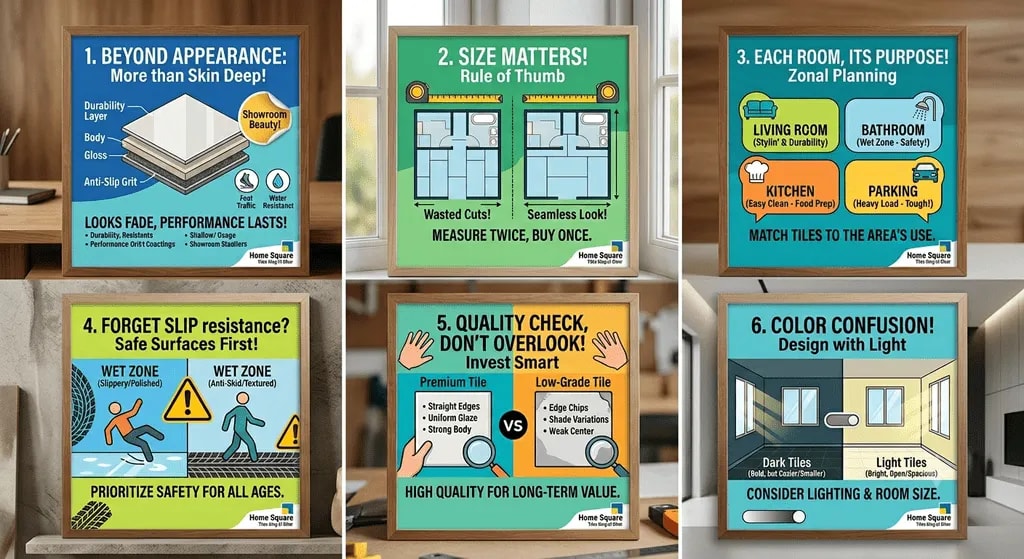
One of the most effective ways to control tile expenses is to choose products according to the function of each room rather than using the same premium tile throughout the property.
Living Room
The living room is often the centrepiece of a home. Choose tiles that complement your furniture, lighting, wall colours, and interior design.
Large-format vitrified tiles and marble-look GVT or PGVT tiles can create an elegant atmosphere. If you want to control expenses, use a standard-size vitrified tile with a neutral finish.
Budget tip: Invest in an attractive design for the main living area and choose coordinated, economical tiles for less prominent spaces.
Bedroom
Bedrooms generally benefit from calm colours and comfortable-looking finishes.
Consider light beige, ivory, grey, or subtle wood-inspired designs. Select tiles based on your cleaning preferences, lighting conditions, and the overall interior theme.
Budget tip: Choose a simple design that coordinates with the living room instead of paying extra for an elaborate pattern.
Kitchen
Kitchen tiles should be practical, easy to clean, and suitable for the intended surface.
Ceramic tiles are commonly used for backsplashes, while suitable vitrified or other approved floor tiles can be considered for kitchen flooring.
Budget tip: Use decorative tiles as a backsplash feature and choose a practical, easy-to-maintain product for the remaining wall or floor area.
Bathroom
Bathrooms require particular attention to slip resistance, water exposure, and cleaning.
Choose appropriate anti-skid floor tiles and wall tiles that suit the bathroom’s design and maintenance needs.
Budget tip: You can create a premium appearance by using decorative tiles on one feature wall while choosing simpler tiles for the remaining surfaces.
Balcony and Terrace
Outdoor areas require tiles that suit weather exposure, drainage conditions, and slip-resistance requirements.
Budget tip: Prioritise outdoor performance and durability over decorative finishes that may not be appropriate for the location.
Parking Area
Parking areas need tiles designed for the expected vehicle loads and site conditions.
Budget tip: Choose a suitable parking tile with verified application specifications instead of spending extra on a decorative indoor tile that may not withstand the intended use.
5. How Tile Size Affects Your Budget
Tile size can influence material cost, installation charges, wastage, and the final appearance of a room.
Common sizes include
- 300 × 300 mm
- 300 × 450 mm
- 400 × 400 mm
- 600 × 600 mm
- 600 × 1200 mm
- 800 × 800 mm
- 800 × 1600 mm
- 1200 × 1800 mm
Smaller formats can be practical for compact spaces, certain wall applications, and areas requiring more detailed layouts. Standard formats may offer a balance between price, installation convenience, and appearance.
Large-format tiles can create a contemporary look with fewer visible grout joints. However, they often require a flatter substrate, suitable handling equipment, appropriate adhesives, and experienced installers.
When comparing tile prices, calculate the cost per square foot or square metre rather than comparing box prices alone. Also confirm the number of tiles per box and the coverage area.
Home Square Tip: Select tile sizes based on room dimensions, design preferences, installation conditions, and total installed cost—not just the price printed on the packaging.
6. Compare Tile Prices the Right Way
Comparing prices is essential when shopping within a fixed budget. However, selecting the cheapest available tile without checking its specifications can lead to higher maintenance or replacement expenses later.
Before purchasing, compare
- Price per square foot or square metre.
- Tile dimensions and thickness.
- Intended application and technical specifications.
- Surface finish and design.
- Water absorption and slip resistance, where relevant.
- Quantity available from the same production batch or shade.
- Transportation and installation expenses.
- Warranty terms and after-sales support, where offered.
For example, two tiles may look similar in a showroom but have different specifications, finishes, or intended applications. A fair comparison requires checking the actual product details.
Always request a written quotation and confirm whether the price includes applicable taxes, delivery, and other charges.
7. Calculate the Quantity of Tiles You Need
Accurate quantity estimation helps prevent unnecessary expenditure and delays.
The basic formula is
Required tile area = Length × Width
For a rectangular room measuring 20 feet by 15 feet
20 × 15 = 300 square feet.
If you add 10% for cutting and wastage
300 + 30 = 330 square feet.
You should therefore plan for approximately 330 square feet of tiles, subject to the actual layout and installer’s recommendation.
If the selected tile costs ₹60 per square foot, the estimated tile material cost would be:
330 × ₹60 = ₹19,800.
This is an illustrative calculation, not a current Home Square product quotation. Installation, adhesive, grout, transportation, and other charges would be additional unless specifically included.
For bathrooms, kitchens, walls, stairs, or irregular layouts, calculate each surface separately.
8. Smart Ways to Save Money When Buying Tiles
You do not need to compromise on the overall appearance of your home to manage your budget effectively.
Choose Timeless Designs
Neutral shades, subtle stone patterns, and classic finishes are easier to coordinate with furniture and interior decor. They can also reduce the need for frequent design changes.
Mix Premium and Economical Tiles
Use premium tiles in prominent areas and practical alternatives in secondary spaces. A carefully planned combination can make the entire property feel premium.
Minimise Unnecessary Design Changes
Using coordinated tiles across connected rooms can create a consistent look and simplify purchasing. However, choose different products where functional requirements demand them.
Purchase the Correct Quantity
Measure the site carefully and include an appropriate wastage allowance. Avoid ordering too little, as matching the same shade or batch later may be difficult.
Check Complete Boxes and Shade Consistency
Inspect packaging, shade codes, calibre information, and batch details before installation. Keep spare tiles from the same batch for future repairs.
Compare Total Project Cost
A lower tile price may not necessarily mean lower overall expenditure. Consider the tile’s suitability, installation requirements, expected maintenance, and replacement risks.
Consult a Tile Professional
A knowledgeable dealer or installer can help you choose suitable sizes, finishes, and quantities based on your room dimensions and project budget.
9. Common Mistakes to Avoid When Selecting Tiles
Avoid these common mistakes to protect your budget and achieve better results
- Choosing tiles based only on appearance.
- Ignoring slip resistance in wet or outdoor areas.
- Purchasing without measuring the complete installation area.
- Forgetting the cost of adhesive, grout, and labour.
- Selecting a large-format tile without checking installation requirements.
- Buying insufficient quantities and later struggling to match the shade.
- Comparing products without checking their technical specifications.
- Spending the entire budget on tiles and leaving insufficient funds for proper installation.
A successful tile project depends on the right combination of design, functionality, product quality, and professional installation.
10. Why Choose Home Square Tiles – Tiles King of Bihar?
When selecting tiles according to your budget, it helps to work with a brand that offers options for different spaces and design preferences.
Home Square – Tiles King of Bihar focuses on tile solutions for residential, commercial, and institutional applications. Its product range includes ceramic tiles, vitrified tiles, double-charge tiles, GVT, PGVT, anti-skid tiles, and parking tiles.
Whether you are planning an affordable renovation, constructing your dream home, or creating a premium commercial interior, Home Square encourages buyers to consider the complete requirements of their project before making a purchase.
Reasons to explore Home Square Tiles include
- Multiple tile categories: Options for different applications and design preferences.
- Contemporary designs: Tile styles suited to modern and traditional interiors.
- Different formats: Product sizes for a variety of room layouts and project requirements.
- Solutions for different spaces: Options for living rooms, bedrooms, kitchens, bathrooms, and parking areas.
- Budget-conscious selection: The opportunity to compare suitable products according to your planned expenditure.
Product availability, technical specifications, and pricing should be confirmed with the authorised seller before ordering.
With thoughtful planning and the right product selection, you can create a beautiful space that reflects your style while keeping your spending under control.
Conclusion
Selecting tiles according to your budget does not mean choosing the cheapest product available. It means understanding your requirements, comparing suitable products, calculating quantities accurately, and balancing initial costs with durability, appearance, installation, and maintenance.
Start by defining your total project budget. Choose ceramic tiles where appropriate for economical wall applications, explore vitrified tiles for practical flooring, consider GVT and PGVT for premium designs, and prioritise suitable anti-skid and parking tiles where safety and performance matter.
Most importantly, select each tile according to the room in which it will be installed. A carefully planned combination of affordable and premium tiles can deliver an attractive, functional, and long-lasting home.
For a wide range of tile options to explore, discover Home Square Tiles – Tiles King of Bihar, where thoughtful design and informed selection can help you create spaces that combine style, functionality, and value.
Home Square – Tiles King of Bihar: Sophistication in Every Surface.
Frequently asked questions
How can I select the best tiles within my budget?+
Start by determining your total project budget, including tiles, installation, adhesive, grout, transportation, and wastage. Then compare products based on their intended use, specifications, finish, and total installed cost.
Which tiles are suitable for a budget-friendly home?+
Suitable ceramic wall tiles and economical vitrified tiles are common choices for budget-conscious projects. The right option depends on the room, product specifications, and installation requirements.
Are vitrified tiles better than ceramic tiles?+
Neither category is universally better. Vitrified tiles are commonly selected for flooring because of their low water absorption and durability, while ceramic tiles are popular for wall applications and certain floors. Choose according to the product specification and intended use.
Are GVT and PGVT tiles suitable for modern homes?+
Yes. GVT and PGVT tiles offer a wide range of decorative designs, including marble-inspired patterns and contemporary finishes. Select a suitable product based on the room, finish, maintenance needs, and budget.
How many extra tiles should I purchase?+
A 5–10% allowance is a common starting point for straightforward layouts. More may be necessary for intricate patterns, diagonal layouts, or complex spaces. Confirm the final quantity with your installer.
Which tiles are best for bathrooms?+
Choose suitable bathroom floor tiles with appropriate slip resistance and wall tiles designed for the intended application. Consider water exposure, cleaning, drainage, and the manufacturer’s technical specifications.
Why consider Home Square Tiles?+
Home Square offers multiple tile categories and designs for different applications. Buyers can explore suitable options according to their design preferences, room requirements, and budget.
Need help choosing?
Talk to the Home Square team for designs, sizes and prices.
Join the conversation
Comments
Leave a comment
Your email is never published. Comments are reviewed before they appear.