14 October 2026 · 11 min read
Vitrified Tiles vs Ceramic Tiles: Which Should You Choose?
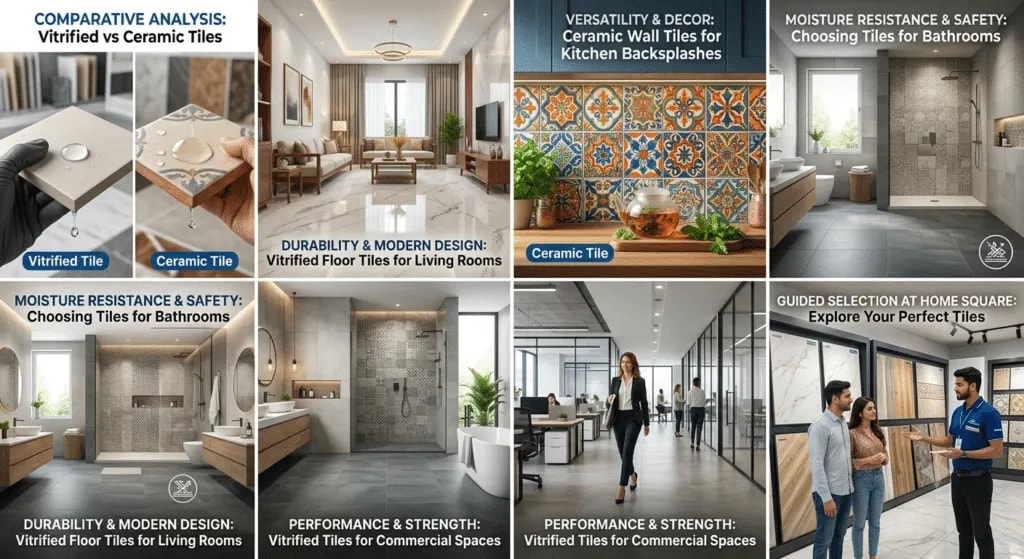
Choosing the right tiles is one of the most important decisions when building or renovating a home. Tiles influence not only the appearance of your interiors but also their durability, maintenance requirements, comfort, and long-term value. With so many options available in the market, one common question homeowners ask is: Vitrified Tiles vs Ceramic Tiles – Which Is Better for Your Home?
Both vitrified and ceramic tiles are popular choices for residential and commercial spaces. However, they differ in manufacturing, water absorption, strength, applications, and overall performance. Understanding these differences can help you select the right tiles for your needs and budget.
At Home Square, proudly building its identity as the “Tiles King of Bihar,” we believe that every space deserves the right combination of design, quality, and functionality. Whether you are designing a modern living room, renovating a bathroom, upgrading your kitchen, or planning a commercial project, choosing the right tiles can transform your space.
In this guide, we will explain the differences between vitrified and ceramic tiles, their advantages, ideal applications, and the factors you should consider before making your final decision.
What Are Vitrified Tiles?
Vitrified tiles are manufactured using a carefully prepared mixture of clay, silica, quartz, feldspar, and other minerals. The mixture is pressed under high pressure and fired at high temperatures to create a dense, hard, and low-porosity tile.
During manufacturing, the materials form a glass-like bonding structure, which gives vitrified tiles their characteristic density and low water absorption.
These properties make vitrified tiles a popular choice for modern homes, apartments, offices, hotels, retail spaces, and other areas where durability and contemporary aesthetics are important.
Key Features of Vitrified Tiles
- Low water absorption: Their dense structure helps limit water penetration.
- High durability: Suitable for many areas with regular or heavy foot traffic, depending on the tile specification.
- Modern designs: Available in marble, stone, concrete, wood, and other decorative effects.
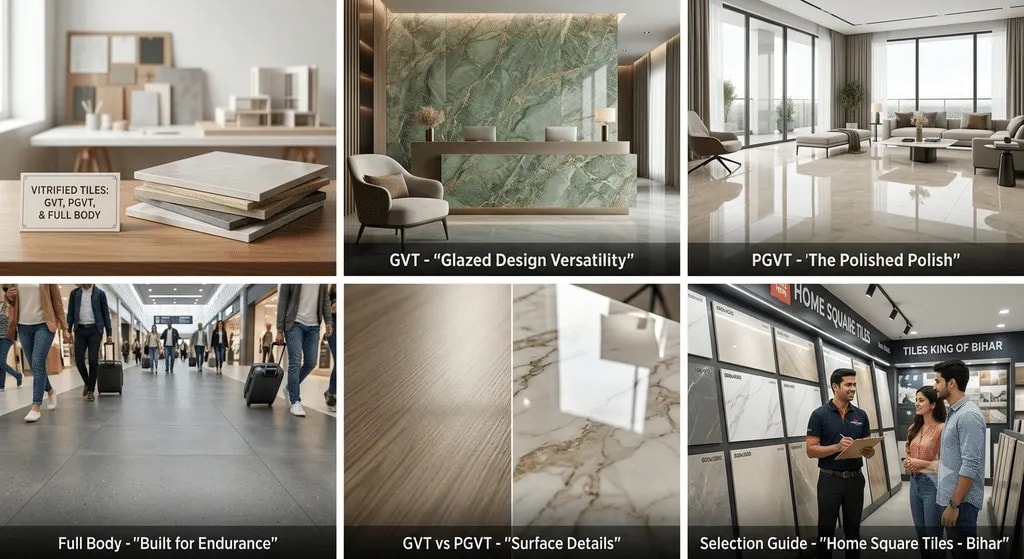
- Multiple finishes: Options include glossy, matte, polished, and textured surfaces.
- Large-format options: Many collections are available in larger sizes for a more continuous visual appearance.
- Easy maintenance: Most vitrified surfaces can be maintained with regular sweeping and suitable cleaning products.
Vitrified tiles are especially suitable for homeowners looking for a combination of modern design, practical performance, and long-term usability.
What Are Ceramic Tiles?
Ceramic tiles are made primarily from natural clay and other minerals. These materials are shaped, dried, and fired in a kiln to create a hard surface. Depending on the manufacturing process, ceramic tiles may be glazed or unglazed.
Glazed ceramic tiles feature a decorative surface layer that can provide colour, patterns, and different finishes. This makes them particularly popular for wall applications and decorative interior designs.
Ceramic tiles are available in a wide variety of colours, patterns, sizes, and textures, making them a versatile option for residential and selected commercial applications.
Key Features of Ceramic Tiles
- Versatile designs: Available in numerous colours, patterns, and decorative styles.
- Budget-friendly options: Many ceramic collections offer an economical solution for home interiors.
- Suitable for walls: Frequently used for kitchen backsplashes, bathroom walls, and decorative features.
- Easy cleaning: Glazed surfaces are generally straightforward to clean.
- Lightweight options: Some ceramic wall tiles are easier to handle than comparable floor-tile products.
- Flexible applications: Available for different interior requirements, subject to the product’s intended use.
Ceramic tiles can be an excellent choice when design flexibility, decorative appeal, and budget are important considerations.
Vitrified Tiles vs Ceramic Tiles: Key Differences
Although both tile types are used in homes and commercial spaces, their properties and ideal applications can differ.
| Feature | Vitrified Tiles | Ceramic Tiles |
|---|---|---|
| Manufacturing | Dense body formed under high pressure and high-temperature firing | Clay-based body formed and fired in a kiln |
| Water absorption | Generally very low | Generally higher, depending on the product |
| Durability | Often suitable for demanding floor applications | Depends on the tile type, thickness, and intended use |
| Strength | Commonly selected for durable floor surfaces | Varies by product and application |
| Design options | Marble, stone, concrete, wood-look, and contemporary finishes | Wide range of colours, patterns, and decorative designs |
| Typical applications | Floors, selected walls, commercial spaces | Walls, backsplashes, and suitable floor applications |
| Maintenance | Generally easy to maintain | Generally easy to maintain, depending on finish and grout |
| Cost | Can be higher depending on size, finish, and quality | Often offers budget-friendly options |
| Large formats | Widely available in many modern collections | Available in selected sizes and collections |
Important: Actual performance depends on the specific product. Always check the manufacturer’s technical specifications, water absorption classification, abrasion or wear rating where applicable, slip resistance, and recommended application.
1. Which Tiles Are More Durable?
Durability is one of the biggest considerations when choosing tiles for floors.
Vitrified tiles have a dense body and are often preferred for areas that experience frequent movement, such as living rooms, hallways, offices, and commercial interiors. Their suitability for a particular application depends on the product’s technical specifications and surface finish.
Ceramic tiles can also provide good service when selected and installed correctly. However, some ceramic products are designed primarily for walls and may not be suitable for floors with substantial foot traffic.
For busy family spaces, vitrified floor tiles can be a practical option. For decorative walls and backsplashes, ceramic tiles can provide an attractive and functional solution.
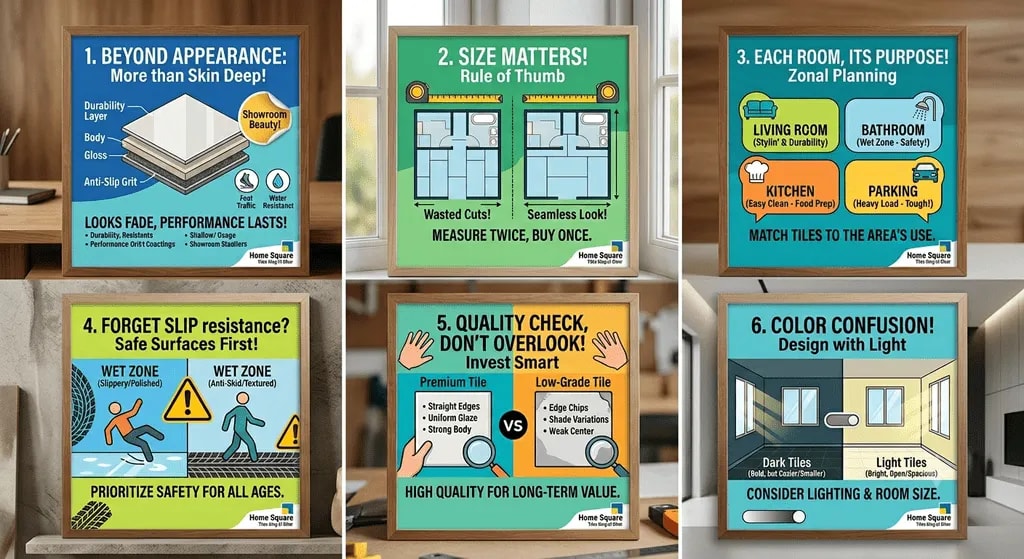
Home Square tip: Before purchasing floor tiles, check whether the product is specifically rated for floor use and the expected traffic conditions.
2. Which Tiles Are Better for Water Resistance?
Water resistance is particularly important in bathrooms, kitchens, utility areas, and other spaces exposed to moisture.
Vitrified tiles generally have low water absorption because of their dense structure. This makes them a popular choice for many moisture-prone interior applications.
Ceramic tiles can also perform well in wet environments, particularly when suitable glazed wall tiles are used. However, water absorption varies between ceramic products, and installation details matter.
Remember that tiles alone do not make a bathroom waterproof. Proper waterproofing beneath the tile installation, appropriate adhesives, correctly treated joints, and suitable drainage are essential.
For bathroom floors, also prioritise slip resistance. A highly polished tile may become slippery when wet, even if it has low water absorption.
At Home Square, the right choice should depend on the specific application rather than appearance alone.
3. Which Tiles Offer Better Design Options?
Modern tiles are available in designs that suit almost every interior style, from minimalist apartments to luxurious villas.
Vitrified Tile Designs
Vitrified tiles are popular for contemporary interiors because many collections offer
- Marble-look surfaces for elegant living rooms.
- Stone-look designs for natural, understated interiors.
- Concrete-look finishes for modern and industrial-inspired spaces.
- Wood-look designs for warm, welcoming rooms.
- Large-format surfaces for a more continuous visual effect.
These designs can help create coordinated interiors across living rooms, bedrooms, hallways, and selected commercial spaces.
Ceramic Tile Designs
Ceramic tiles offer considerable decorative flexibility, particularly for walls and feature areas. Popular applications include:
- Colourful kitchen backsplashes.
- Patterned bathroom walls.
- Decorative feature walls.
- Textured and geometric designs.
- Accent areas that complement neutral flooring.
Which is better for design? Neither is universally better. The ideal choice depends on your desired appearance, room requirements, and the specific collections available.
Explore the tile designs at Home Square to find styles that complement your home’s architecture and interior theme.
4. Which Tiles Are More Affordable?
Budget is another important factor when comparing vitrified and ceramic tiles.
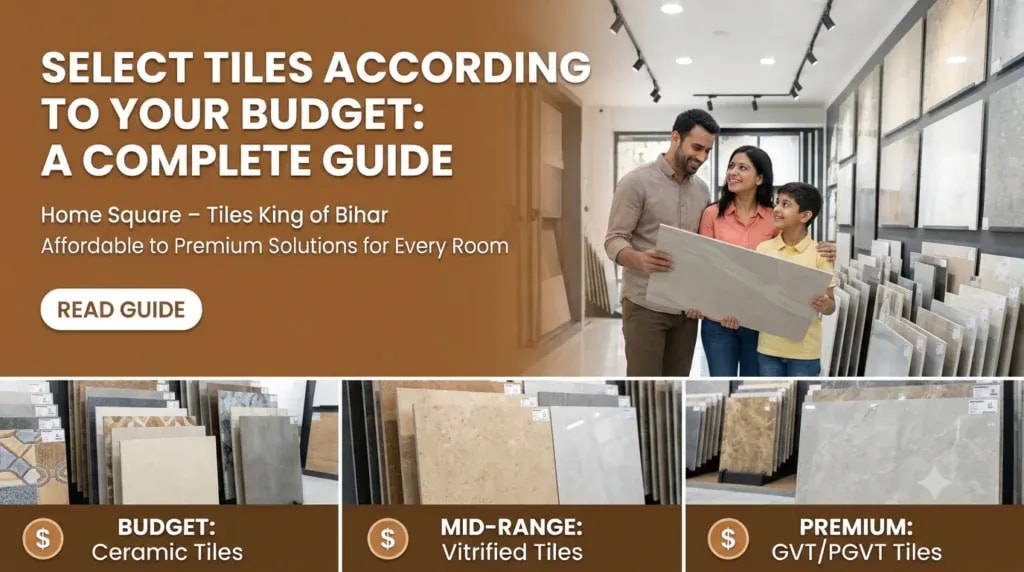
Ceramic tiles often offer affordable options, particularly for wall applications and simple decorative requirements. They can be a suitable choice when you want to refresh an interior without selecting a premium flooring product.
Vitrified tiles may cost more in some categories, especially large-format, premium-finish, or specialised designs. However, pricing varies considerably by size, thickness, finish, brand, and product specifications.
When comparing tile prices, consider more than the cost per square foot. Your overall budget should include:
- Tile purchase cost.
- Tile adhesive or other recommended fixing materials.
- Grout and installation accessories.
- Labour and installation charges.
- Cutting, wastage, and pattern-matching requirements.
- Surface preparation and waterproofing where needed.
A lower initial price does not automatically mean lower total project cost. Choosing tiles appropriate for the application can help avoid unnecessary replacement and repair expenses.
Home Square tip: Finalise your tile budget after measuring the area and accounting for the installation method, design pattern, and expected wastage.
5. Which Tiles Are Easier to Maintain?
Both vitrified and ceramic tiles can be relatively easy to maintain when the right products are chosen.
Vitrified tiles generally have a dense body, which helps limit water absorption. Many glazed ceramic tiles also have surfaces that are easy to clean.
For everyday maintenance
- Sweep or vacuum regularly to remove dust and grit.
- Mop with clean water and a suitable pH-neutral cleaner.
- Avoid abrasive cleaning materials that could damage the surface.
- Clean spills promptly, particularly on textured or porous surfaces.
- Maintain grout joints and inspect them periodically.
Polished surfaces may show dust, watermarks, or scratches more visibly than some matte finishes. Textured surfaces may require additional attention to remove dirt from their contours.
For the best results, follow the care instructions provided for the specific tile collection.
6. Which Tiles Should You Choose for Different Rooms?
The right tiles depend on the room’s function, moisture exposure, expected foot traffic, and design requirements.
Living Room
Vitrified floor tiles are a popular option for living rooms because they are available in many contemporary designs and larger formats. Marble-look and stone-look finishes can complement both modern and traditional interiors.
Bedroom
Vitrified tiles can provide a clean, coordinated appearance across bedrooms and adjoining spaces. Wood-look finishes are another option for creating a warm, natural aesthetic.
Ceramic tiles may also work for suitable bedroom applications, depending on the product specification and your preferences.
Kitchen
For kitchen floors, choose tiles designed for floor use with suitable durability and slip resistance. Vitrified tiles are a common choice.
For backsplashes and walls, glazed ceramic tiles can offer decorative flexibility and easy cleaning. Select surfaces that are appropriate for exposure to cooking splashes, grease, and cleaning products.
Bathroom
Ceramic wall tiles and suitable vitrified tiles can both be used in bathroom designs.
For bathroom flooring, prioritise wet-area slip resistance, proper drainage, and correct installation. Do not choose a floor tile based on glossy appearance alone.
Commercial Spaces
Offices, retail stores, restaurants, and other commercial areas may require tiles with suitable wear resistance, strength, and maintenance characteristics. Vitrified tiles are often considered for these applications, but the exact specification must match the expected traffic and usage.
Exterior Areas
Outdoor tiles need to be selected for weather exposure, slip resistance, and the intended installation conditions. Use products specifically rated for the
7. Vitrified Tiles vs Ceramic Tiles: Which Is Better for Indian Homes?
Indian homes experience a wide variety of conditions, including dust, changing temperatures, heavy monsoon rainfall in some regions, and different levels of daily household activity.
For many modern homes, vitrified tiles are an attractive flooring option because they combine low water absorption with a broad range of contemporary designs.
Ceramic tiles remain a practical choice for many walls, kitchen backsplashes, decorative features, and suitable flooring applications.
The best solution is often a combination of both.
For example, you might choose marble-look vitrified tiles for the living room, wood-look vitrified tiles for bedrooms, and decorative ceramic tiles for a kitchen backsplash. Bathroom flooring should be selected separately according to wet-area safety requirements.
The important thing is to match the tile to the room, not simply select the most expensive or visually impressive option.
8. Why Choose Home Square for Your Tile Selection?
Selecting the right tiles requires more than browsing attractive designs. You need to consider the intended application, technical specifications, appearance, installation requirements, and overall project budget.
Home Square is building its reputation as the “Tiles King of Bihar” by focusing on tile selection, design possibilities, and solutions for different project requirements.
Whether you are planning a new home, renovating an apartment, designing a villa, or working on a commercial project, Home Square aims to help you explore options suited to your vision.
What Makes the Right Tile Selection Important?
Design that complements your space: Choose colours, patterns, and finishes that work with your furniture, lighting, and architectural style.
Suitable products for different applications: Compare flooring, wall tiles, bathroom tiles, kitchen tiles, and other categories according to their intended use.
Choices for different budgets: Evaluate products based on their purchase price, installation requirements, and long-term suitability.
A coordinated interior appearance: Combine complementary tile designs across rooms to create a cohesive look throughout your home.
Informed purchasing decisions: Review the relevant specifications before finalising tiles for residential or commercial projects.
If you are looking for modern tile designs in Bihar, Home Square can be part of your tile-selection journey. Explore the available collections and choose products that balance style, functionality, and value.
Conclusion: Make the Right Choice with Home Square – Tiles King of Bihar
When comparing vitrified tiles vs ceramic tiles, remember that there is no single option that is best for every room. Vitrified tiles are often preferred for durable, low-absorption flooring and contemporary interiors, while ceramic tiles provide versatile and attractive solutions for walls, backsplashes, and suitable floor applications.
The smartest decision is to select tiles based on your space, lifestyle, budget, design preferences, and the product’s technical specifications.
At Home Square – Tiles King of Bihar, the goal is to help customers discover tile solutions that bring together design, functionality, and lasting value.
Whether you are building your dream home, renovating your interiors, or planning a commercial project, make your tile selection with care and confidence.
Home Square – Tiles King of Bihar. The right tiles for spaces that inspire.
Explore Home Square’s tile collections and take the next step towards creating a beautiful, functional space that reflects your style.
Frequently asked questions
Are vitrified tiles better than ceramic tiles?+
Vitrified tiles generally have lower water absorption and are often preferred for durable flooring. Ceramic tiles are excellent for many wall applications and can also be suitable for floors when appropriately rated. The better choice depends on the application and product specifications.
Which tiles are best for home flooring?+
Vitrified tiles are a popular option for living rooms, bedrooms, and other residential floors. However, the right selection depends on foot traffic, slip resistance, design preference, and budget.
Are ceramic tiles suitable for bathrooms?+
Yes. Ceramic wall tiles are commonly used in bathrooms. For bathroom floors, select a product specifically rated for floor use with appropriate slip resistance under wet conditions.
Are vitrified tiles waterproof?+
Vitrified tiles generally have very low water absorption, but a tiled surface is not automatically a waterproof building system. Wet areas still require proper waterproofing, installation, and joint treatment.
Which tiles are more budget-friendly?+
Ceramic tiles often provide economical options, while vitrified tile prices vary by size, design, and finish. Compare the complete installed cost rather than the tile price alone.
Can vitrified and ceramic tiles be used together?+
Yes. A well-planned design may use vitrified tiles for floors and ceramic tiles for decorative walls or backsplashes. Ensure that each product is suitable for its intended application.
Where can I explore tile designs in Bihar?+
You can explore Home Square’s available tile collections and compare designs, finishes, sizes, and application requirements. Contact the company or visit its showroom for current product availability and purchasing information.
Need help choosing?
Talk to the Home Square team for designs, sizes and prices.
Join the conversation
Comments
Leave a comment
Your email is never published. Comments are reviewed before they appear.